Showing posts with label native bees. Show all posts

Tuesday, 3 July 2018

This Winter's Flowers

Winter time colour in the garden from the flowers that are blooming this cold weather season. I love the eye-catching red of the salvia and the vibrance of the violas dotted through the veggie patch. The hot pink of the geranium in its pot  is just as glorious. The delicate pale pink flowers, of the ground cover whose names escapes me, cover the ground around the little water tank. The penstemon is still flowering months after its first magenta blossoms opened. The broccoli, that never really amounted to much, is redeeming itself with its bright yellow flowers that signal it is going to seed. So much colour from this Winter's flowers. 

salvia 

viola

geranium

groundcover 

penstemon

broccoli

Our little native bees take flight now only when the day warms enough. The little entrance to their home is a "hive" of activity; a traffic jam of tiny bees flying in and out. 

Our tiny native bees.

A native bee about to land on a flower.

Our tiny native bees work industriously in among the winter flowers. Their favourites seems to be the broccoli and groundcover blooms. I am not sure I have favourites though, I love all of them. 

What's blossoming around you right now?

Meg


Monday, 4 September 2017

Spring Beginnings

The weather here has been Spring-like for a little while now. Many days of warmer temperatures reflecting the very short Winter we have had. (Perhaps that is the new normal??) It is very dry here and I heard over the radio that it is predicted to be a hot, dry Summer. (Perhaps that is the new normal too??) The first new leaves are beginning to unfurl on our neighbour's Plane Trees that spread their branches well over our shared boundary. I love these beautiful, deciduous trees and how they mirror the weather and seasons. It seems though that they only lost their leaves a short time ago and now they are readying themselves for Spring. I wonder if they had a long enough Winter sleep??

A Spring leaf unfurls.

In our own garden, our little native bees are taking flight from their hive sooner rather than later each day now as the temperature reaches 18C earlier. Did you know that native bees only venture out when the temperature climbs to that magic degree? The native birds are making good use of the bird baths; coming in to drink and splash about in the cool water. The first snake, a carpet python curled up in the eaves of the verandah, has been spotted and a pair of nocturnal Long-nosed Bandicoots have been visiting at night, leaving their tell-tale drill holes throughout the garden and lawn and forcing us to think up ways to protect our plants. (We put up a temporary wire mesh fence, dug well into the ground to try to keep them away from the base of the avocado tree...we'll see how that goes!) The last of late Winter's offerings have been harvested; a few lettuces, leeks, baby potatoes and little sweet pea posies among them. 

A pretty posy indeed!

From the very few passionfruits left after sulphur crested cockatoo raids, a deep yellow and tangy passionfruit curd has been made. Some for us and some for friends. Fresh, locally grown and sweet strawberries were enjoyed with a french toast breakfast and a creamy Fathers' Day cheesecake sponge, a cheat's "cheesecake" really for there is no cheese in it at all, was a special homemade treat for Dad and Grandad for our Sunday afternoon tea.

 A little pot of passionfruit curd. Mmm!

Sweet local strawberries make perfect french toast toppings.

Homemade sponge underneath with a creamy "cheesecake" topping.

One new craft project and one rediscovered project are taking shape. A soft blue cotton washcloth is forming on my knitting needles and a little hand-stitched tote, that I began years ago, is being completed one tiny hand-sewn stitch at a time. Although more time consuming than using a sewing machine, I am enjoying the slowness of hand sewing again. 

 Brown linen and a soft cotton lining held together with hand-sewn stitches.

We spent a lovely evening in at our city's South Bank to celebrate the birthday of a special young teenager friend. A train ride in, a shared Mexican meal with much laughter and fun, a ride together on the big Wheel of Brisbane that offered a twinkling bird's eye view of our city at night. Finished off with a slice of divine homemade chocolate birthday cake, it was a happy Spring night indeed.

I hope you have had a happy start to your new season too.

Meg


Friday, 5 May 2017

The Work of the Bees

One of the things that gives me the most pleasure in my garden is the sight and sound of bees working among the flowers.  Our teeny-tiny native bees take flight from their hive each morning on a trajectory to their favourite exotic and native blooms. Larger and solitary native bees, like the beautiful Blue-banded Bee and the noisy Teddybear Bee, find their treasure here too. Honeybees stop by to plunder the flowers and fill their pollen baskets before taking off to somewhere new.

A honeybee upon a salvia flower in our garden.

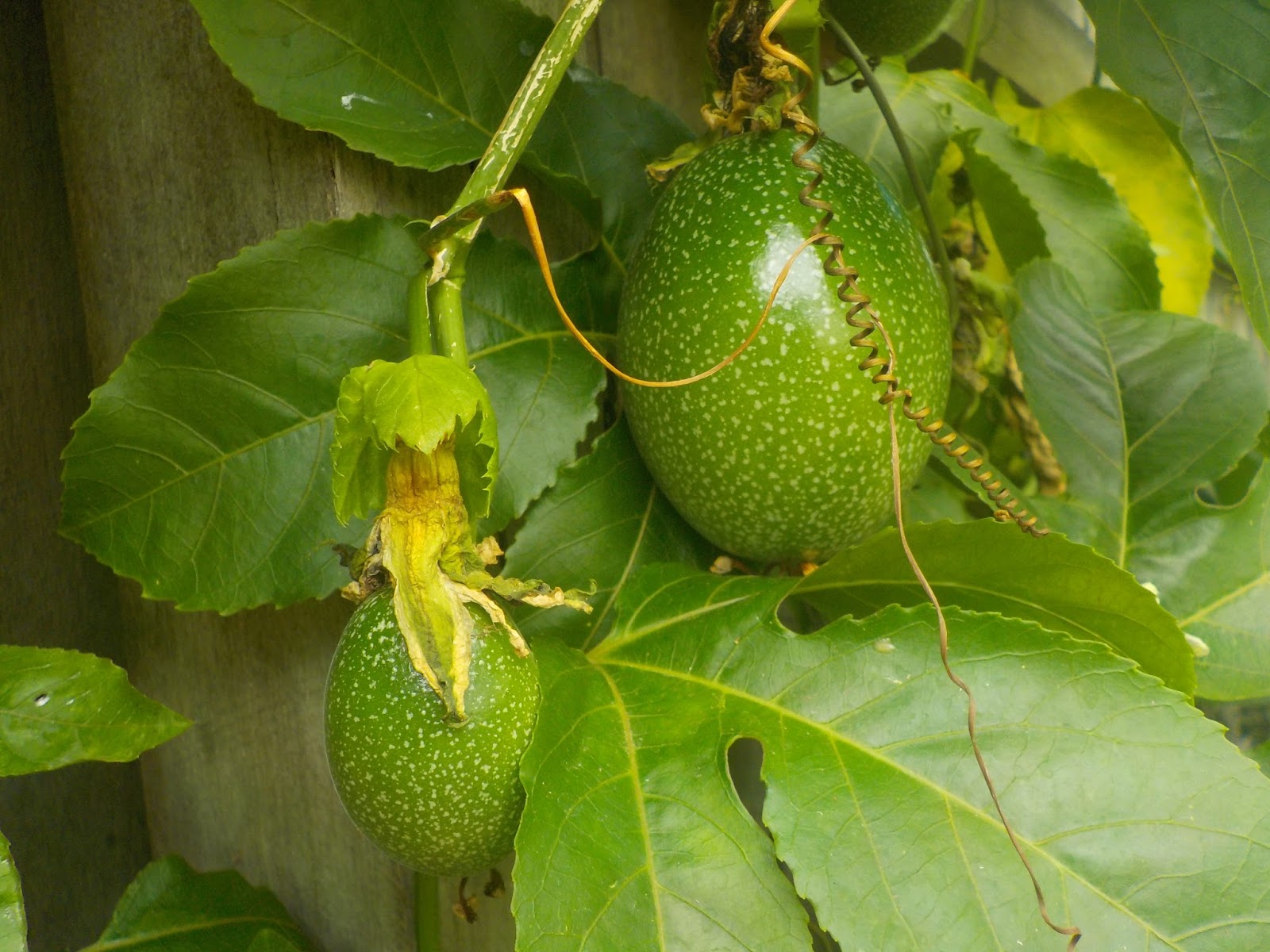
While they may be only small, the work of bees is of such huge importance. As they go about their work, they pollinate a very significant percentage of our food crops. (80% of Australia's fruit, vegetable, grain and nut crops according to Michael Mobbs in his book, "Sustainable Food"). In our own garden, the evidence of their "handy-work" is everywhere. It's in the newly forming passionfruits that hang like baubles from the vine that runs along our back fence. It's in the ripe mandarins that grew after the sweetly-scented blossoming of our backyard tree. And, it's in the beginnings of a destined-for-soup pumpkin forming on our "volunteer" vine. This is food that we can harvest and eat because of the work of bees. 


Evidence of the work bees do grows in our garden.

Bees do so much more than make honey!  Unfortunately though, honeybee populations are in decline around the world because of a phenomenon called colony collapse disorder. It seems that a number of factors may cause this dramatic collapse/death of a hive: pesticides (with much focus on a group of chemicals called neonicotinoids), habitat loss, disease and varroa mite infestation. With these threats impacting upon their populations, bees need all the help we can give them. We can:

Grow flowers and other bee-friendly plants!
(habitat & food)

Avoid using chemicals and insecticides!
(on lawns & gardens)

Provide water for bees to drink!
(A shallow dish with a stick or stone bridge so they don't drown.)

Construct a bee hotel. 

Write to councils to ask them to stop spraying implicated insecticides/pesticides.
(e.g. on parks, roadside kerbs etc.)

Buy raw, local & untreated honey.
(Get to know the beekeeper & their ethics.)

Grow some of your own food without using chemicals.
(The bees will help you with pollination!)

Adopt a native stingless bee hive for your garden.

Read more about bees and their importance to our food supply.

Tiny native bees at the "front door" of their hive in our garden.

If we pondered, just for a moment, what could happen to our food supply without the pollination of crops carried out by bees, supermarket shelves might look like this! That's only one sobering example of just how much our food supply is reliant upon the work of the bees. 

The next time I see a honeybee loading up its pollen baskets in my salvia flowers or see one of our tiny native bees atop a passionfruit bloom, I think I'll whisper a quiet, "Thank you" and I'll promise to do more.

Meg

p.s. ABC TV's Catalyst program has this story on colony collapse disorder if you are interested in learning more.


Tuesday, 14 February 2017

Scenes from a Scorcher

Today, an overcast sky and a gentle breeze offer a welcome contrast to the sweltering temperatures from the latest heatwave of our Summer. Days on end of high temperatures seems to be the way of things this season, so when a cooler day comes along, it dawns with something akin to blessed relief.

The extremely hot conditions over the weekend just past kept us inside most of the time. It reached 43C in the shade of our covered deck, shadecloth blinds down, on Sunday. It was 40C at 10:30 in the morning! Had we put the thermometer out in the sun, that needle would've nudged way higher. 

Our heatwave days looked like this:


The hot Summer sun rises out beyond our back deck. 

The temperature reached 40C on our shaded deck at 10:30a.m. Sunday morning.

Early morning sprinkler watering the avocado tree.

Keeping the water up to salad greens like lettuce. 

Skinks, like this one, were active in the garden.

 An old bedsheet to shade our native bee hives.
(Before we secured it.)

Simple foods/meals were prepared without adding extra heat. 
(Homemade peanut butter.)

Reading books and watching a movie were our afternoon activities.
(All borrowed from our local library...free!)

Refreshing, homemade treats like these were essential!


Heatwaves do thankfully come to an end though the temperature is set climb again throughout the week here. Think I'll need to make more of those icepops for next weekend!

Have you been experiencing weather extremes where you live? How do you prepare for them? 

Meg


Friday, 27 January 2017

Bold and Bright Zinnias

Our sub-tropical Summer can be a harsh season. Temperatures can soar, heatwaves can last for days on end, high humidity can leave one drenched in perspiration from just thinking about gardening (or any other active outside pursuit). It may be too dry with little to no rain, leaving the grass crunchy underfoot and everything gasping for a good drink, or storms will roll through in the afternoons bringing rain and cooling relief from the heat and humidity of the earlier day. 

Summer's light here can be harsh too;  bright, strong light that makes one squint and reach for sunglasses when just looking out the window! In the garden, that kind of light can seem to leach the colour from delicate, softly-hued flowers. So I find that it is the bold and bright colours, of blooms like these Zinnias, that seem to reflect Summer's light rather than being turned drab and lacklustre by it. 

Bright pink.

 Deep yellow.

Bold orange.

Milky cream.

Deep pink.

Sweet salmon.

Ruffled red.

Started as tiny seeds, and thinned out as they grew, these colourful and cheerful flowers are such a delight. I can see them from my kitchen window as I'm doing the washing up which makes me smile (the Zinnias, not the washing up;) It is amazing to me that such tiny seeds have all that vibrant colour within. Just add soil and water and sunshine!

A little bud hints at the colour within.

In bloom and so colourful!

Up close ... a native bee in the centre of a Zinnia bloom.

I love these bold and bright flowers. My tiny native bees and visiting honey bees love them and I'm sure you would love them too if you have room for some Zinnias in your Summer.

I hope you have a bright and happy weekend.

Meg


Wednesday, 18 January 2017

A Garden Visitor 8

I heard this fuzzy little fellow before I saw him! Working industriously in our star jasmine, buzzing noisily and so very quickly from one flower to the next, was this very fluffy little bee.

Teddy Bear Bee in flight.

He is an Australian native Teddy Bear Bee (Amegilla bombiformis). My photo is somewhat blurry because this bee is notoriously tricky to photograph. No sooner did I have it in focus and it buzzed off! If you'd like to see much clearer and beautiful photos of this adorable native bee, you can visit this Aussie Bee website.

Teddy Bear Bees are one of Australia's native solitary bees. They are so called because of their golden 'fur'  that resembles that of a teddy bear. They are buzz pollinators, like Blue-Banded Bees, meaning they can take hold of a flower and 'shake' it through vibration to release the pollen inside. Amazing!

This was the first time I have seen one of these special little native bees in our garden. It feels a wonderful thing because, like many other native animals, these bees need habitat and food sources. It's a lovely thing to think that the garden we are growing here provides that for these tiny and very important creatures.

Tuesday, 27 September 2016

Roaring Meg: A Native Climber

Roaring Meg is a beautiful native climber. It's planted at the base of the retaining wall that leads to our front steps and is wending and winding its way happily up and along its wire mesh trellis. In Spring, it greets everyone who visits our home with stunning clusters of tubular, magenta flowers. What a welcome!
 
 "Roaring Meg" in bloom this Spring.

Originally, non-natives like mandevilla and wisteria were planted where Roaring Meg is now. But they faltered in the hot, South-Westerly position where this native climber is thriving. (Yes, it's true, I even managed to kill off a wisteria vine!)

A cluster of spectacular magenta blooms.

There's so much to adore about this native climber. It's reasonably fast-growing without being too vigorous. It responds well to a light pruning once it has finished flowering. It grows well in full sun and isn't overly thirsty. It has lovely deep green leaves and, of course, there are these beautiful blooms. 

These blooms are an open invitation for little native bees.

Planted in a hedge, at the base of Roaring Meg's trellis, are fragrant Gardenias. These are all in bud and I can't wait to see the deep pink of these blooms offset by the pure white petals of the Gardenias when they open. (There's always something to look forward to in a garden, isn't there!)

With a name like Roaring Meg, I'm sure there's no way I could've gone wrong with this gorgeous native climber. Even if your name's not Meg, it could be a lovely choice for your garden too.

Meg 


Wednesday, 21 September 2016

Shades of Pink in September

From the lightest of pale pinks through to deep, dark hues that are almost red, there are many blooms blushing pink in our early Spring garden.


The light pink flower head of the scented Rose Geranium.

 The stunning buds and blooms of a native climber.

The gorgeous pink flower spike of a spicy Salvia.

The delicate and fragrant petals of a pink-flowering Sweet Pea.

 The ruffled pink petals of colourful Dianthus.

The beautiful colours of these September blooms clearly announce that Spring is here. Do you have pink blooms in your garden too?

Meg 


Sunday, 4 September 2016

Rocket Flowers

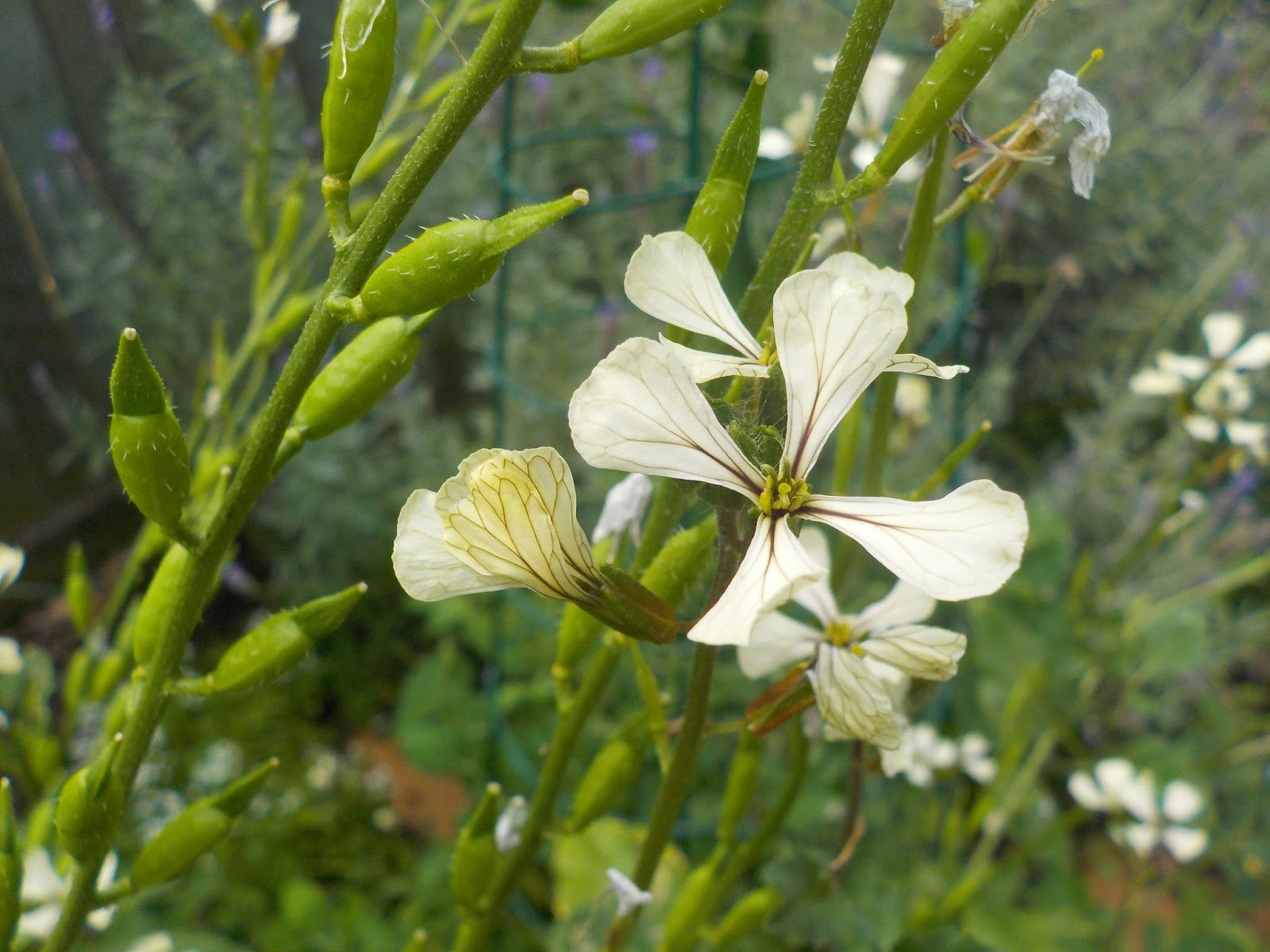
At the beginning of Spring, it is the simple white flowers of leafy, spicy Rocket (Arugula) heralding the change to a warmer season in our garden. Cross-shaped blooms, four veined petals in each, sway in the breeze atop the long, thin flower stalks these salad greens are sending skywards. These beautiful blossoms are edible and, just like the plant's dandelion-like leaves, they add a pungent peppery "kick" to salads.


The simple, beautiful and edible blooms of Rocket.

It isn't their spiciness attracting our native bees to these flowers though. Rather, these simple, unruffled flowers give them easy access to pollen and nectar.  After finally cutting back the basil "supermarket" our native bees had been foraging in, letting the Rocket flower and go to seed has provided an alternate feast for these tiny, busy little creatures.

 A little native bee gathering pollen from a Rocket flower.

After these pretty flowers are spent, plump, bright green seed pods form. Encased within are the developing seeds.  When these pods are dry and brown, I will pick them and collect the little brown seeds hiding within. Then, I will have free Rocket seeds to store and share and scatter next year.

Plump seed pods form after the flowers.

Saved seeds mean more rocket next year. More rocket means more of these simple, sweet flowers which means more seeds and then, again, more rocket and in turn more flowers. Our native bees (and me) will be happy indeed:)

Meg