Showing posts with label beneficial insects. Show all posts

Thursday, 16 April 2020

So Many Butterflies

Flitting through the air around our garden and neighbourhood have been ever so many more butterflies.  These delicate insects are, as always, ever so hard to photograph with their fluttering wings and dizzying flight paths but, every so often, when they alight upon a favourite plant, they stay still just long enough to capture something of their beauty.

A beautiful Blue Tiger Butterfly.

Dozens of Blue Tiger Butterflies, with wings that remind me of stained glass cut-outs, are gathering around one heavenly-scented blossoming tree in the park. 

The female Common Eggfly on a mandarin leaf.

The Common Eggfly and the Orchard Swallowtail are favouring the lone mandarin in our garden. I spot them from our kitchen window as they weave in and out of the glossy green mandarin leaves.

The closed wings of the Common Crow butterfly.

In the warmth of the morning,  Common Crow butterflies flit and flutter around our star jasmine. We often see these butterflies in our garden.

The bright blue wings of a Blue Triangle Butterfly

Flashes of the most exquisite bright blue signal the flight of the  Blue Triangle Butterfly. They seem to like the salvias in our garden. Even when these butterflies are feeding, their wings constantly vibrate so they are rarely still.

A little butterfly bag.

These butterflies, and others of their fluttering kind, bring such a sense of delight and wonder at just how beautiful and perfect nature can be. I even discovered a butterfly, stitched in purples, on a piece of vintage linen. So many butterflies!

Meg


Friday, 5 May 2017

The Work of the Bees

One of the things that gives me the most pleasure in my garden is the sight and sound of bees working among the flowers.  Our teeny-tiny native bees take flight from their hive each morning on a trajectory to their favourite exotic and native blooms. Larger and solitary native bees, like the beautiful Blue-banded Bee and the noisy Teddybear Bee, find their treasure here too. Honeybees stop by to plunder the flowers and fill their pollen baskets before taking off to somewhere new.

A honeybee upon a salvia flower in our garden.

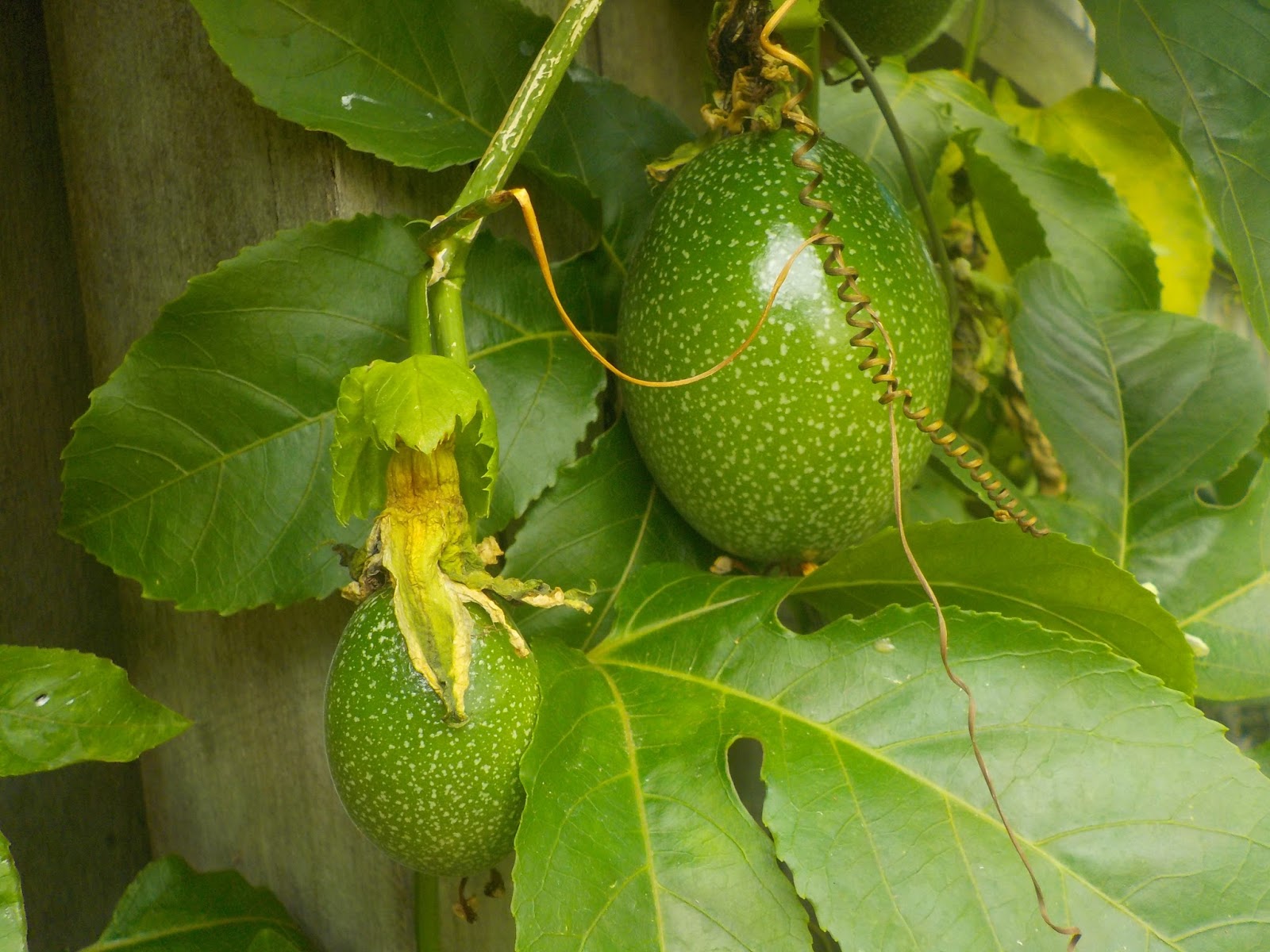
While they may be only small, the work of bees is of such huge importance. As they go about their work, they pollinate a very significant percentage of our food crops. (80% of Australia's fruit, vegetable, grain and nut crops according to Michael Mobbs in his book, "Sustainable Food"). In our own garden, the evidence of their "handy-work" is everywhere. It's in the newly forming passionfruits that hang like baubles from the vine that runs along our back fence. It's in the ripe mandarins that grew after the sweetly-scented blossoming of our backyard tree. And, it's in the beginnings of a destined-for-soup pumpkin forming on our "volunteer" vine. This is food that we can harvest and eat because of the work of bees. 


Evidence of the work bees do grows in our garden.

Bees do so much more than make honey!  Unfortunately though, honeybee populations are in decline around the world because of a phenomenon called colony collapse disorder. It seems that a number of factors may cause this dramatic collapse/death of a hive: pesticides (with much focus on a group of chemicals called neonicotinoids), habitat loss, disease and varroa mite infestation. With these threats impacting upon their populations, bees need all the help we can give them. We can:

Grow flowers and other bee-friendly plants!
(habitat & food)

Avoid using chemicals and insecticides!
(on lawns & gardens)

Provide water for bees to drink!
(A shallow dish with a stick or stone bridge so they don't drown.)

Construct a bee hotel. 

Write to councils to ask them to stop spraying implicated insecticides/pesticides.
(e.g. on parks, roadside kerbs etc.)

Buy raw, local & untreated honey.
(Get to know the beekeeper & their ethics.)

Grow some of your own food without using chemicals.
(The bees will help you with pollination!)

Adopt a native stingless bee hive for your garden.

Read more about bees and their importance to our food supply.

Tiny native bees at the "front door" of their hive in our garden.

If we pondered, just for a moment, what could happen to our food supply without the pollination of crops carried out by bees, supermarket shelves might look like this! That's only one sobering example of just how much our food supply is reliant upon the work of the bees. 

The next time I see a honeybee loading up its pollen baskets in my salvia flowers or see one of our tiny native bees atop a passionfruit bloom, I think I'll whisper a quiet, "Thank you" and I'll promise to do more.

Meg

p.s. ABC TV's Catalyst program has this story on colony collapse disorder if you are interested in learning more.


Friday, 3 March 2017

Common and Beautiful

Resting upon a leaf, of the star jasmine that runs itself rampant along one of our fences, was this brown-winged butterfly. It is a Common Australian Crow Butterfly (or Oleander Butterfly).

 Common Australian Crow Butterfly rests on our star jasmine.

While not as colourful and boldly patterned as its showy cousins, and a much more common sight in our garden than some others, it is none the less beautiful. Fine and delicate with white spots that look like a painter has dabbed them on, oh so precisely!

Flying away.

It might be common but, like so many things, very beautiful too when one looks closely and with wonder.

Have a lovely weekend. 
Meg


Wednesday, 18 January 2017

A Garden Visitor 8

I heard this fuzzy little fellow before I saw him! Working industriously in our star jasmine, buzzing noisily and so very quickly from one flower to the next, was this very fluffy little bee.

Teddy Bear Bee in flight.

He is an Australian native Teddy Bear Bee (Amegilla bombiformis). My photo is somewhat blurry because this bee is notoriously tricky to photograph. No sooner did I have it in focus and it buzzed off! If you'd like to see much clearer and beautiful photos of this adorable native bee, you can visit this Aussie Bee website.

Teddy Bear Bees are one of Australia's native solitary bees. They are so called because of their golden 'fur'  that resembles that of a teddy bear. They are buzz pollinators, like Blue-Banded Bees, meaning they can take hold of a flower and 'shake' it through vibration to release the pollen inside. Amazing!

This was the first time I have seen one of these special little native bees in our garden. It feels a wonderful thing because, like many other native animals, these bees need habitat and food sources. It's a lovely thing to think that the garden we are growing here provides that for these tiny and very important creatures.

Monday, 31 October 2016

A Queen's Lace

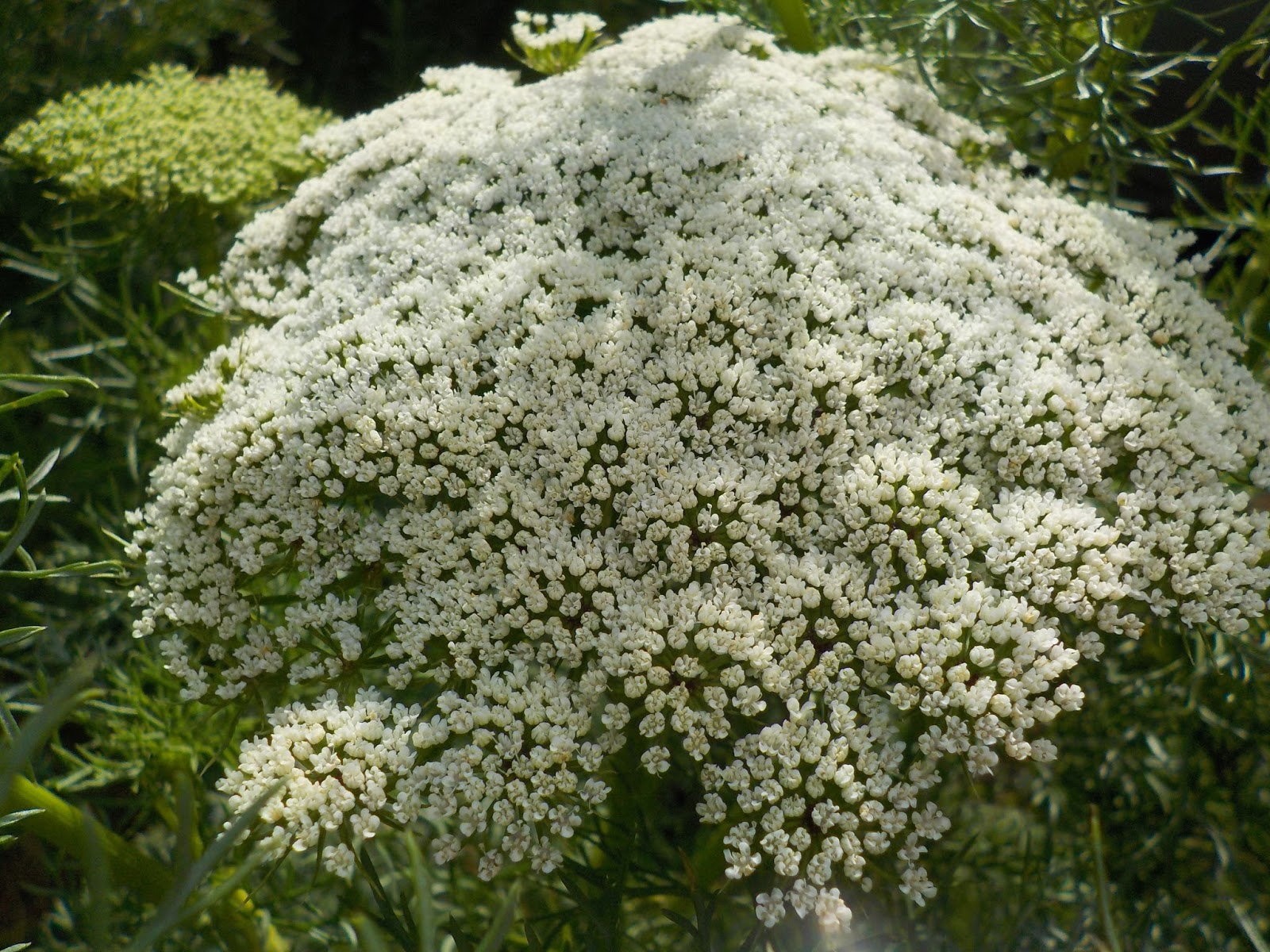
Clustered together, on the exquisite umbels of Queen Anne's Lace, are hundreds of tiny white flowers. What a collective impression they make! Each large and full flowerhead is reminiscent of frilly white lace. According to legend,  delicate white lace tatted by Queen Anne of England became the flowers of this beautiful plant. A very regal beginning!


Oh, so fine! The delicate, frilly flowerheads of Queen Anne's Lace.

One of the things I love about this old-world plant is the way in which the flowers bloom. At first, each umbel is closed up while tiny buds form. Then, each umbel's "spokes" gradually open out until the flowers are in full bloom, covered in a mass of white "lace". After the flowers are spent, the "spokes" of each umbel become dry and brown and close in on themselves again. So much like opening and closing umbrellas!


The beautiful umbels of Queen Anne's Lace.

Queen Anne's Lace is known by another name too, Wild Carrot (Daucus Carota). As a member of the carrot family, its young roots are edible though I have never tried them (and one has to be careful as I've read that certain relatives of Queen Anne's Lace are poisonous) as I grow it just for its beautiful blooms and the beneficial insects it invites into the garden. 

I planted just two little seedlings of Queen Anne's Lace in my garden a couple of years ago. Now, thanks to the ease with which the seeds disperse on the wind from those dry, closed-up umbels, I have dozens of plants and many white, lacy flowers to enjoy each Spring. 

Do you grow Queen Anne's Lace too?

Meg 


Friday, 30 September 2016

A Garden Visitor 7

Amid the bright green, ferny foliage of Queen Anne's Lace, a little ladybug is busy. Busy performing natural pest control!

Ladybugs are a welcome presence in our garden.

The orange, spotty presence of these beneficial insects indicates there's a food source for them in the garden. Closer inspection of my Queen Anne's Lace revealed quite a few tiny aphids, those pesty, sap-sucking insects that happen to be one of a ladybug's favourite foods. Rather than intervening, as many a gardener wielding a toxic spray might, I left this sweet little ladybug to enjoy its meal. As a hungry ladybug can eat many aphids in a single day, I figure things are under control. 

Have a lovely weekend.

Meg

p.s. If you'd like to attract ladybugs to your garden, you can plant Queen Anne's Lace (wild carrot), cosmos, geraniums, dill, cornflowers or calendula.